
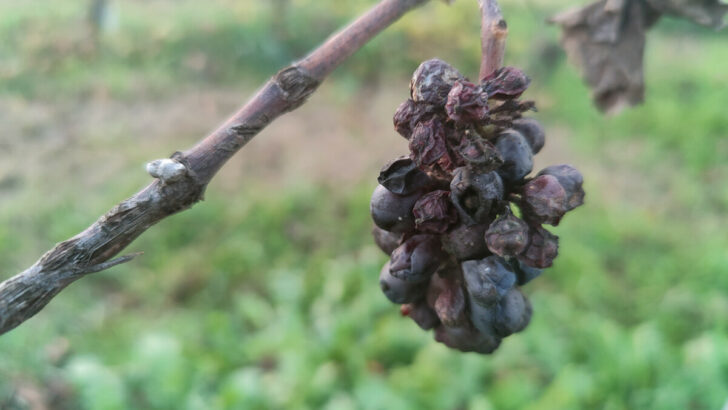

Most people take their food without a side of rot. After all, rot is not the most appetizing thing.
However, when it comes to wine, rot is a necessity. Believe it or not, rot has a pivotal role in making the best and most pricey wines, but first, let’s define Botrytis Cinerea.
Contents
What Is Botrytis Cinerea? Noble Rot Explained
In layman’s terms, Botrytis Cinerea or noble rot is a fungus common in ripe or overripe white grapes. Essentially, mold pierces the skin of grapes leading to water evaporating. This rapid moisture loss causes the grape to shrivel up like a raisin.
The sugars and acids of noble rot grapes are far more concentrated than those found in regular grapes. Therefore, noble rot grapes are used to produce sweeter wines.
Let’s talk about the science of noble rot for a second, but there’s no need to worry about big terms you don’t know the meaning of. I promise to keep this explanation nice and simple.
As the wine ferments, sugar is transformed into carbon dioxide and alcohol. Typically, with regular white grapes, fermentation stops once all the sugar in the grape juice is altered, creating a dry wine. However, noble rot grapes have higher levels of sugars, so there will still be a relative amount of sugar in the one once fermentation occurs.
As a result, winemakers end up with a naturally sweet wine with a unique flavor from the noble rot.
Where Did Noble Rot Come From?
The history of botrytized wine is a little unclear. Some suggest it was created by Laczkó Máté Szepsi, who made the first aszú wine in 1630.
Furthermore, botrytized wines were already mentioned in the Nomenklatura of FabriciusBalázsSziksai, which was created in 1576. However, recent research uncovered that aszú wine predates the Nomenklatura of FabriciusBalázsSziksai by 5 years.
Moreover, when vineyards started to be classified in the Tokaj region, one of the ratings given to the natural environment the wine is produced was based on the ability to develop noble rot.
Another popular legend is that noble rot originated in Germany in 1775. As the story goes, Riesling producers from Schloss Johannesburg waited for the approval of the manor honor Heinrich von Bibra, Bishop of Fulda, before harvesting their grapes.
During this same year, the abbey courier was robbed while delivering the message that harvesting the grapes was approved. Harvesting was postponed for 3 weeks, giving Botrytis Cinerea enough time to turn the grapes into shriveled raisins.
The botrytized grapes were considered useless and given to the poor. These peasants used the grapes to produce a delicious sweet wine called Spätlese, which translates to late harvest wine.
Over the next few years, people started tinkering with the original recipe for Spätlese and Auslese wine (selected harvest) was released in 1787, and Eiswein wine (ice wine) was released in 1858.
Although the exact origins of noble rot are still unclear, it led to the sweet wine we know and love today.
What Are Ideal Grapes For Noble Rot?
The perfect grapes for noble rot are thin-skinned grapes that grow in tight clusters. The noble rot can easily pierce the thin skin of these types of grapes. In addition to this, noble rot can spread faster to other grapes.
Semillon is the ideal grape for noble rot. However, other popular grapes for noble rot varieties include Muscat, Sauvignon Blanc, Gewürztraminer, Chenin Blanc, and Riesling.
Why Are Botrytized Wines So Expensive?
There are a few reasons why noble rot wines are so pricey. First noble rot does not spread through the entire cluster of grapes evenly.
In fact, it’s rare to see whole clusters of grapes will be infected with noble rot. Therefore, the grapes must be picked by hand, and the noble rot wines are sweeter.
Second, there is a risk involved with producing this type of wine. Noble rot is inconsistent. So, some years, noble rot will not occur in other years. However, in other years’ noble rot will affect the grapes with grey rot and destroy them.
Third, the grapes are more concentrated due to the moisture loss, so the water content is much lower. The decreased moisture loss means less water will be extracted from the grapes, which equals a lower quantity of water. One vine of grapes only makes one glass of noble rot wine.
Furthermore, since the juice from botrytized grapes is concentrated, it requires longer, slower fermentations. Therefore, producing botrytized wines is an expensive tedious process.
Final Thoughts
The next time you see Botrytis Cinerea or noble rot, there is no need to worry. Simply grab a glass and enjoy a glass of this delicious, sweet wine.